


What Happens If You Install a Higher Amperage Battery in Your Car?
RSS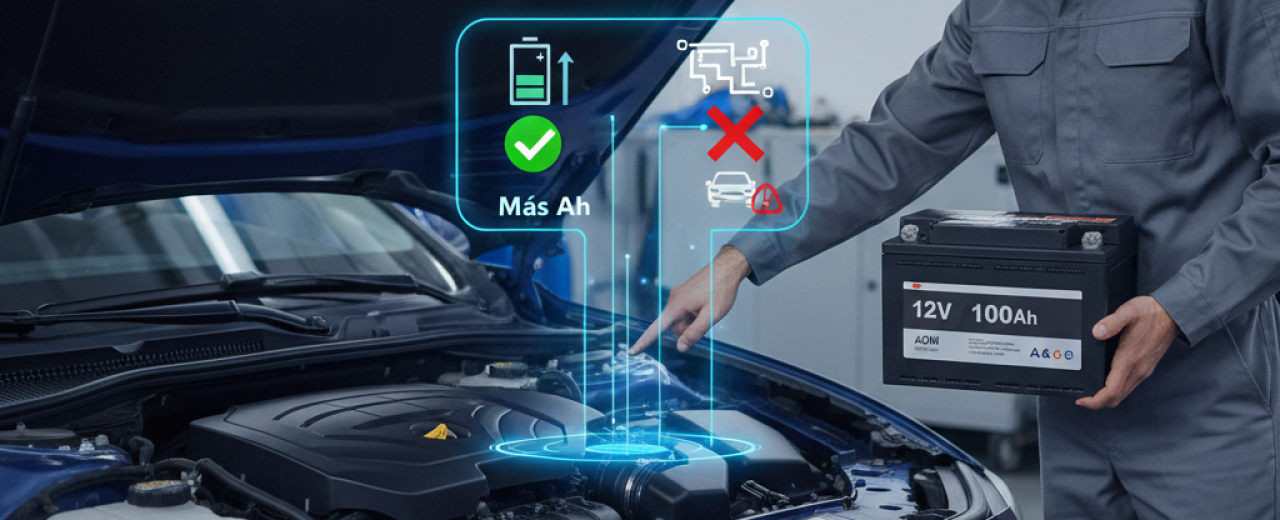
Few upgrades spark as many questions—and as much confusion—as changing to a car battery with higher amperage. The idea sounds simple: more power must be better, right? In reality, the answer is nuanced, especially in the context of today’s intricate automotive electrical systems.
Quick Answer: Can You Install a Higher Amperage Battery?
Yes, but “higher amperage” can mean two different things in the world of automotive batteries. For most drivers, “more amps” really comes down to either capacity (measured in Ah, or ampere-hours) or cold cranking power (measured in A/CCA). Each serves a different purpose, and not every increase has the same outcome for your car.
- Ah (Ampere-hours): Indicates how much total energy the battery can store. Think of this as your reserve tank for every electronic system running while the engine’s off.
- CCA (Cold Cranking Amps): Measures the battery’s ability to provide a short burst of power to start your engine, especially in cold conditions.
Pushing either parameter higher can be beneficial under the right circumstances, but risks rise if you stray too far from what’s recommended for your vehicle.
General Compatibility: When Is Upgrading Safe?
Most cars will tolerate moderate increases in battery specs if you adhere to several critical rules:
- Voltage must match: Passenger vehicles are almost universally 12V systems. This is non-negotiable.
- Physical fit: The new battery must drop in perfectly—proper dimensions, secure mounting, and cable reach without strain.
- Correct polarity: Terminal arrangement must match your car to avoid installation mishaps.
- Technology compatibility: If your car requires EFB or AGM (especially with Start-Stop), do not downgrade.
- Moderation is key: Small increases make sense; big jumps distort system balance and may cause issues.
When these requirements are respected, most cars will operate normally and benefit from additional capacity or starting power. Problems lurk outside these boundaries.
Which battery does your car need? Give us your plate and we'll tell you
Official Varta distributor · 27 years in Málaga · fitted in ~15 min, no appointment
When Is Upgrading NOT Advisable?
- Large differences from the recommended spec: If you go much higher in capacity, particularly with mostly short urban commutes, the battery may perpetually undercharge.
- Modern cars (abundant electronics): Sophisticated energy management and monitoring systems can become confused or misbehave if spec and technology don’t match.
- Start-Stop systems: These cars demand higher-cycling batteries (EFB/AGM). Slipping in a standard battery may result in malfunction and early failure.
- Battery Management System (BMS): Vehicles with BMS calibrate charging and usage to very specific battery characteristics. Mismatching chemistry, capacity, or even type—without proper system registration—can cause a host of annoying and performance-sapping symptoms.
Understanding the Numbers: What Does “More Amps” Actually Mean?
Voltage (V): The Non-Negotiable Rule
The voltage of your battery (almost always 12V in passenger cars) is foundational. Installing anything else means total system incompatibility, risking damage or immediate failure. “Increasing amps” does not mean changing voltage.
Capacity (Ah): More Room for Energy
Capacity, measured in ampere-hours, determines how long your battery can support electrical loads with the engine off. Benefits of a modestly higher Ah include:
- Better resilience during long periods of inactivity
- Improved performance for heavy accessory use
- Reduced likelihood of deep discharge in demanding conditions
Drawback: Substantial increases may leave your alternator struggling to fully recharge the battery, especially on short trips—but only if you overshoot by a wide margin.
Cranking Power (A/CCA): Instant Muscle
Cold cranking amps quantify how much power your battery can dump into the starter, especially in low temperatures—a critical factor for diesels and vehicles in frosty climates.
Shortcut: If your car cranks slowly or you live “where winters bite,” pay special attention to CCA over raw Ah.
Important Note: Ah and CCA Aren’t Always Linked
A higher capacity battery often—but not always—features a higher CCA. One can be substantially higher while the other remains moderate, so choose based on your real-world needs.
The Outcome: What Happens When You Increase Battery Capacity?
The Advantages
- Less chance of running flat after periods of disuse.
- Greater support for modern electronics and aftermarket enhancements.
- Smoother operation when usage patterns are heavy or inconsistent.
The Risks
Substantial increases in Ah can result in undercharging if your lifestyle involves many short drives. This chronic “half-charge” existence accelerates wear and leads to early battery failure.
Real-world scenario: Upgrading from 60Ah to 65-70Ah is usually safe; jumping to 90Ah or more in a compact city car could eventually lead to charging problems if your alternator isn’t designed to keep up.
Physical Fit—The Persistent Oversight
No upgrade is worthwhile if the battery doesn’t fit securely. Poor fitment causes vibrations, insecure cables, and even physical damage—compromising both longevity and safety.
What If You Boost Starting Power?
Too Low: You’ll Notice It Instantly
- Sluggish starts
- Difficulty in cold weather
- Occasional failure to crank the engine
Always meet or exceed your car’s recommended CCA—never go below.
Too High: Diminishing Returns—and Some Small Risks
Going much higher on CCA does not make your vehicle “perform better.” Your car will only draw the amps it needs. Extremely high CCA values can acutely increase the risk of damage in the (unlikely) event of a major fault, such as a short circuit—though this is rarely a primary worry for most drivers.
Critical Rule: The Right Battery Is Not the Largest
It’s a persistent myth that bigger is always better. The most suitable battery for your car is the one that:
- Matches the required technology, size, and polarity
- Provides adequate capacity and starting power for your usage
- Fits seamlessly into your vehicle’s electrical ecosystem
Anything beyond that can be redundant—or counterproductive—especially if it interferes with how your vehicle charges or manages the battery.
Where Modern Technology Adds Complexity: Start-Stop, AGM/EFB, and BMS-Equipped Cars
Start-Stop: Why Battery Technology Matters More Than Numbers
Vehicles with Start-Stop systems require batteries that withstand frequent, repetitive cycling (multiple starts per trip, longer periods supporting electrical loads with the engine off). Only EFB or AGM batteries are engineered for this—standard lead-acid batteries will quickly falter.
- Consequence of a mismatch: Disabled Start-Stop, rapid battery deterioration, frequent error messages, and reduced vehicle features as a self-preservation response.
BMS: When the Car “Knows” Its Battery
Many new vehicles use a Battery Management System. If you switch to a different capacity, chemistry, or type without properly registering the change in the car’s software, you risk:
- Poor charging performance
- Misinformation about battery status
- Erratic Start-Stop operation
- Accelerated battery wear due to improper charge/discharge cycles
Upgrade and Downgrade Rules
- AGM should be replaced with AGM
- EFB should be replaced with EFB (unless the manufacturer approves an AGM upgrade)
While moving from EFB to AGM can be considered in some Start-Stop cars—if the car allows and you update the BMS—moving the other way to save costs is a recipe for problems.
Real Electrical Risks: When Bigger Isn’t Better
If an electrical fault already exists (damaged wire, poor ground, short circuit), a more powerful battery won’t cause it—but may intensify the fallout by feeding the fault longer before fuses act. Despite built-in protections, sensitive electronics can still be damaged by abnormal electrical events before safeguards respond.
Lesson: Never attribute odd electrical problems to your battery alone. Rule out system faults before considering a higher-spec battery as the solution.
Checklist: How to Upgrade Responsibly
- Maintain correct voltage (almost always 12V)
- Match battery technology to vehicle requirements
- Ensure precise physical fit and terminal orientation
- Decide whether extra Ah, extra CCA, or both serve your actual needs
- For BMS or Start-Stop systems: strongly consider professional installation and system registration
Case Studies
Upgrading Ah in an Urban-Use Car
Beware the “city driver’s dilemma.” More capacity sounds good, but with frequent short trips, your alternator may never fully recharge the battery, resulting in chronic partial charge and faster degradation. Incremental increases are safe, but dramatic jumps can backfire.
Cold Climates and Diesels: Prioritize CCA
Here, extra capability for cranking amps yields genuine benefits—quick starts and reliable operation even in biting cold. Increases in CCA (within a reasonable range) make sense, far more than just loading up on reserve capacity.
Swapping AGM for Conventional
For vehicles originally equipped with AGM (often with Start-Stop), downgrading to a conventional battery frequently triggers an onslaught of Start-Stop malfunctions, rapid battery decline, and persistent warning lights. Keep to the designated battery specification unless a genuine, compatible alternative is confirmed.
Not sure how many Ah or how much CCA your car takes? At Málaga Baterías, Official Varta Distributor at C/ La Orotava, 100 (29006 Málaga), we identify the exact part from your number plate and tell you which battery is the right one — no appointment. Phone: +34 952 31 01 18.
Frequently Asked Questions
What happens if I install a battery with more Ah?
Higher Ah means more reserve energy—useful for long idle periods or high electrical usage. The main risk is undercharging in short-trip scenarios, not outright alternator damage.
What about more CCA?
Within range, more CCA improves cold starting reliability, especially for diesels or in winter. Extremely high CCA does not inherently “enhance” your vehicle and could exacerbate the impact of faults during electrical failures.
Can a large battery break my alternator?
Alternators are not usually harmed by a slightly larger capacity battery unless the system is already marginal. Chronic undercharging is a risk if you seldom drive far. Proper diagnosis and compatibility vetting matter more than battery size.
Is it safe to upgrade from EFB to AGM?
Sometimes—if the car is compatible, and you (or your installer) register the new battery in the car’s management system.
How do I know if my car has Start-Stop or BMS?
If your car’s engine stops and starts automatically in traffic (Start-Stop) or shows energy management info, you likely have these systems. When in doubt, check your manual and the specification of your current battery.
As automotive systems grow ever more sophisticated, making the right battery choice requires more than matching numbers on a sticker. The real expert move—for peace of mind and reliable performance—is to prioritize compatibility and verified technology over raw specs. A well-matched battery is silent, efficient, and invisible—just the way it should be.
Related articles

Which battery does an outboard engine need (by engine power)

How to winterise your boat battery (and jet ski battery) on the Costa del Sol

Lithium batteries on a boat: when they are worth it and when they are not

How many amp hours does your campervan or motorhome battery need? A step-by-step calculation

Leisure battery and solar panel in a campervan or motorhome: how to match them

Car battery shop near me in Málaga: 6 things to check

Exide and Tudor batteries in Málaga: a workshop's verdict and when to choose them over Varta

Used Car Battery: Is It Worth It? Honest Guide

Register a new car battery: BMS and Start-Stop reset

0 comment(s)